
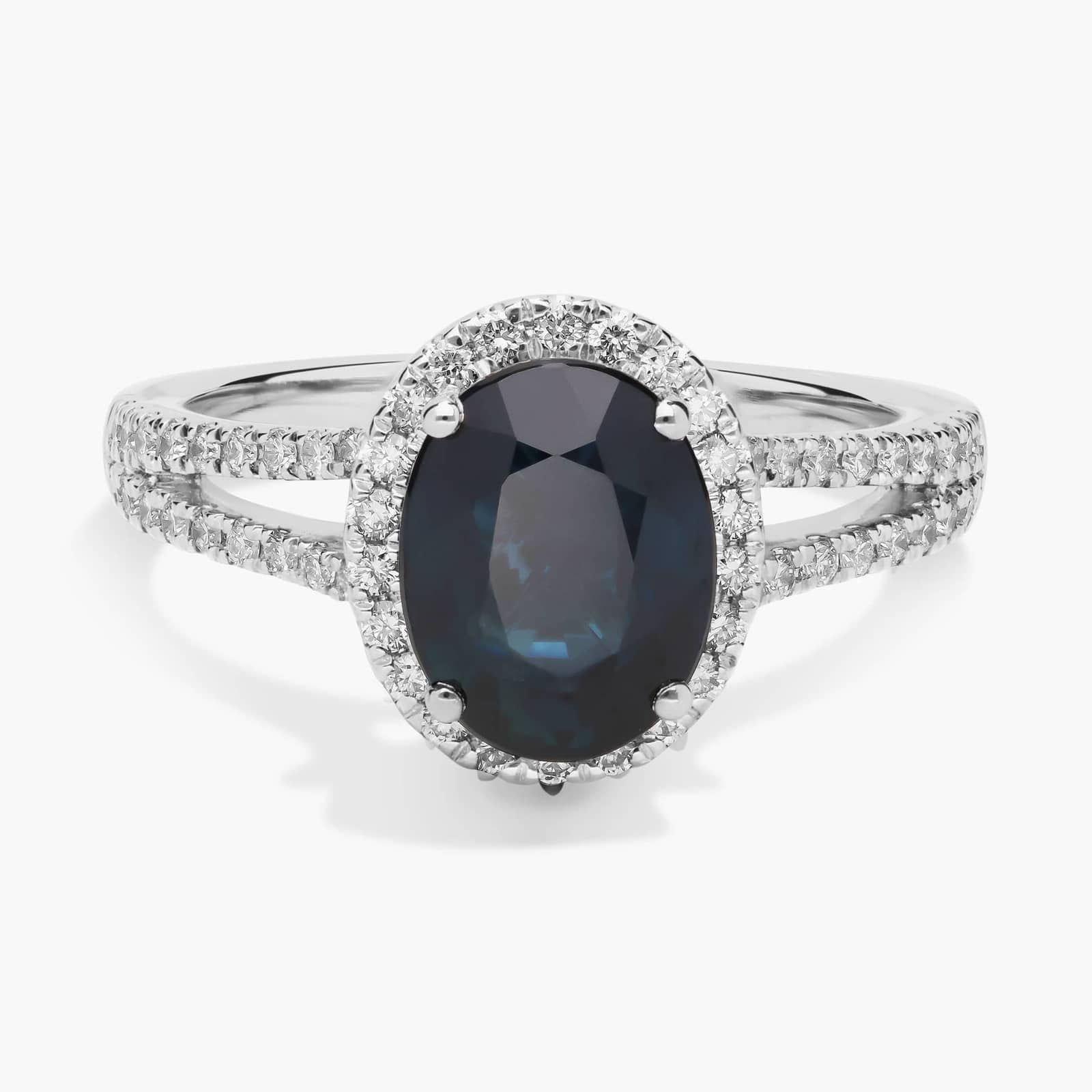
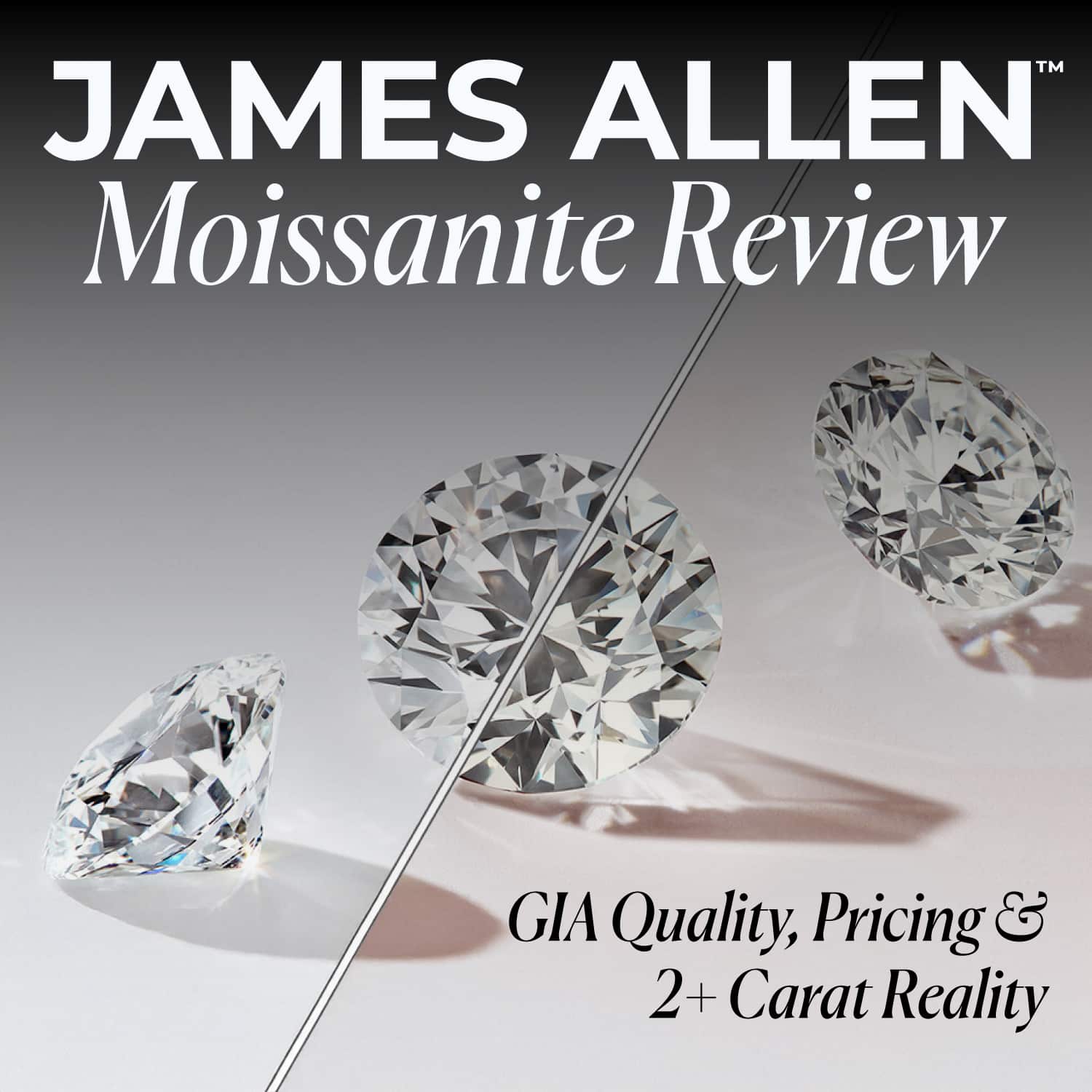
James Allen entered the moissanite market significantly later than their competitors, but they did it with a specific strategy: legitimacy. Unlike budget retailers selling “house brand” stones with generic certificates, James Allen pairs GIA-Graded Moissanite with high-end 14K Gold and Platinum settings—the exact same architectural mountings they use for their $50,000 natural diamonds.
This combination creates a structural integrity and reliability that separates their inventory from the “fashion grade” moissanite flooding online marketplaces.
Everyone has told you that Moissanite looks like a “disco ball”—too sparkly, too fake, and obviously not a diamond. But have you actually seen a GIA-certified, precision-cut stone set in a heavy, solid gold band? It is a completely different animal.
I’m Mehedi, and I am here to help you decide if dropping $900 on a massive, certified James Allen stone is the smartest engagement ring hack of 2026, or if you are just paying a premium for a brand name. Let’s look at the rocks.
Think You’re A Moissanite Pro?
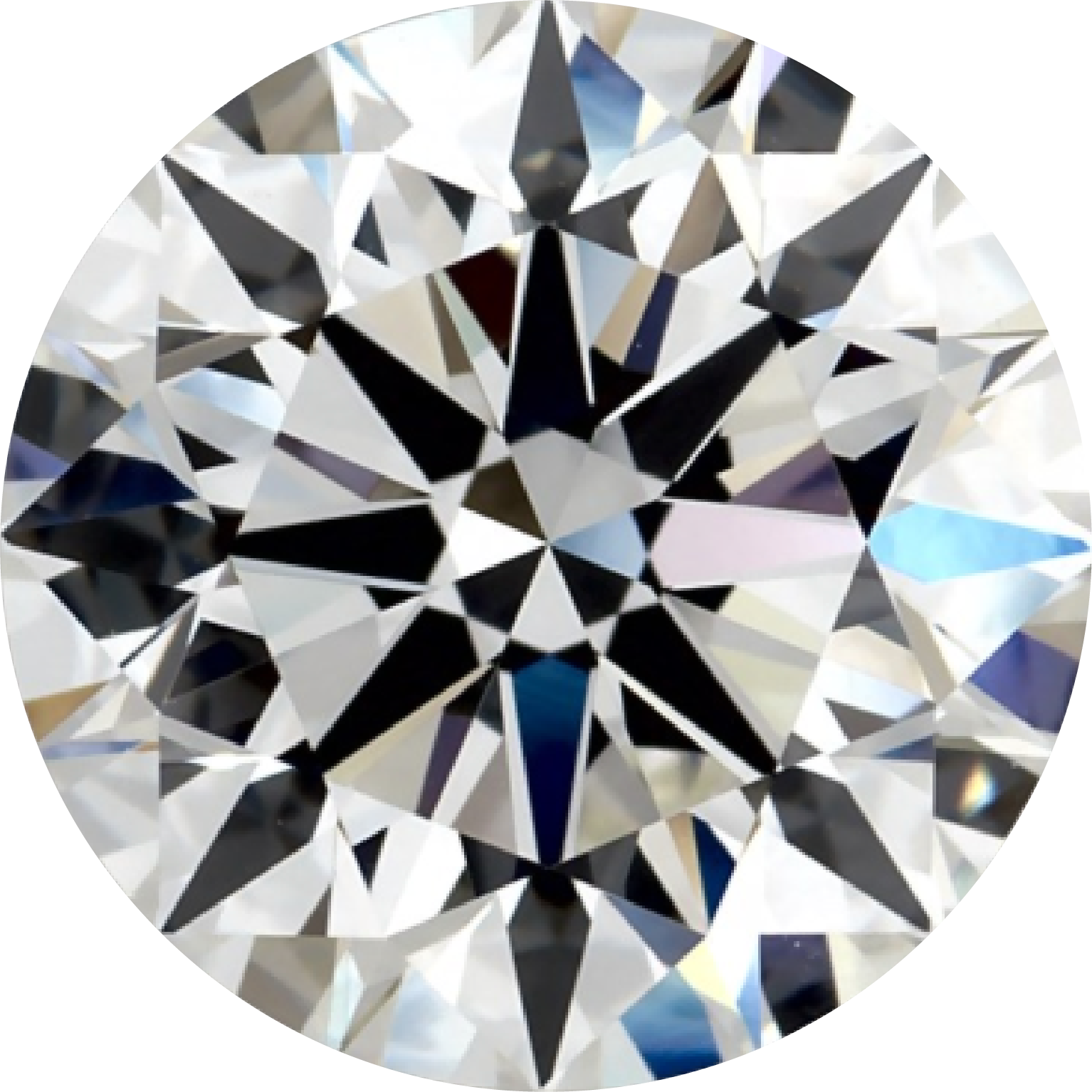
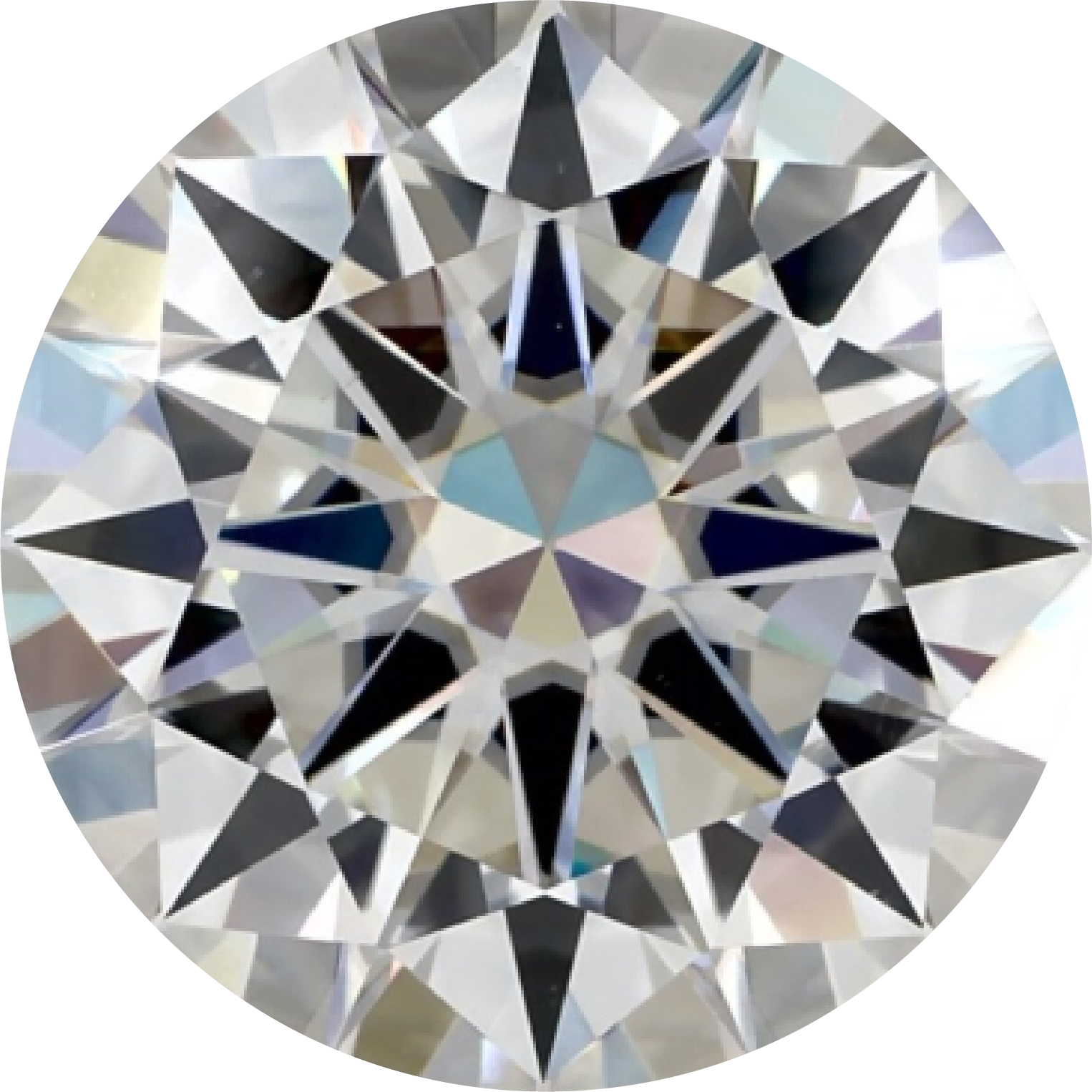
Think you’re a Moissanite Pro and can tell the difference? Choose the gemstone that you like better. Is it the one for $1,180 or the one for $39,000? Both are 2.48 carats.
The “GIA Factor”: Why It Matters
Most people assume Moissanite is “just a simulant,” so the paperwork doesn’t matter. That is the trap.
If you buy a moissanite ring from a drop-shipping site or Amazon, you usually receive a generic “Certificate of Authenticity” card. In the industry, we call these “worthless paper.”
They are printed by the factory selling the stone, which means there is zero unbiased quality control. They claim the stone is “Colorless” (DEF), but when you open the box, it has a yellow or grey tint.
James Allen flipped the script.
They distribute Moissanite stones that are graded by specific laboratories, referencing the same rigid standards used for diamonds. While GIA generally does not issue full “Diamond Grading Reports” for synthetics in the same way, the stones stocked by premium retailers like James Allen are vetted for Cut Precision.
Why Cut Quality Stops the “Oil Slick”
The number one complaint about cheap moissanite isn’t the sparkle; it’s the “Film.” Low-quality moissanite often develops a cloudy, rainbow stain on the surface known as the “Oil Slick” over time.
- The Cause: This is usually chemical residue sticking to poor surface polishing or micro-texture on the facet.
- The Fix: Precision Faceting. James Allen’s inventory focuses on premium cuts that mirror “Ideal” diamond proportions. A smoother, higher-quality polish means less surface drag for oils to stick to.
For a direct visual comparison of how a precision-cut moissanite handles light versus a standard lab diamond, check my deep dive: Moissanite vs Lab Diamond Side by Side.
Comparison: The Certification Reality
To understand what you are actually buying, you need to see the difference between “Retailer Grading” and “Real Grading.”
| Feature | Budget / Amazon Moissanite | James Allen / Premium Moissanite | Why It Matters for Your Wallet |
|---|---|---|---|
| Quality Verification | House Card. Unverified “Authenticity” cards with no unique serial tracking. | Lab Vetted. Every stone is checked by certified gemologists for structural integrity. | Ensures the stone matches the high specs you paid for, preventing “cloudy” surprises. |
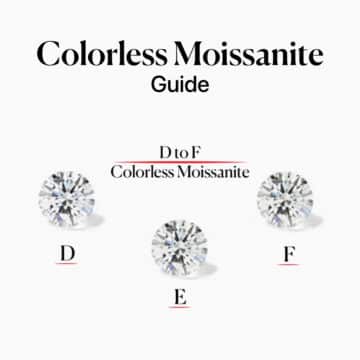
| Color Consistency | Inconsistent. “D-E-F” stones often arrive with visible yellow or greenish undertones. | Strict D-F. “Colorless” actually means pure, transparent white with no hidden tints. | Essential for a seamless look when setting in White Gold or Platinum bands. |
| Return Policy | High Risk. Complicated returns to overseas sellers or strict “restocking” fees. | Risk-Free. 30-Day “no-questions-asked” money-back guarantee with free return shipping. | Acts as a Safety Net; if it doesn’t meet your expectations, you lose $0 in the process. |
| Market Verdict: While Amazon offers tempting prices, a comparison of James Allen vs. Amazon moissanite shows that the “savings” often vanish once you factor in poor cut quality and a lack of real certification. Avoid the hidden moissanite problems by choosing a retailer that offers a 360° HD view of the exact stone you are buying. | |||
The Bottom Line: You pay more at James Allen because you are paying for Consistency. You are paying so that you don’t have to order three rings to find one that isn’t yellow.
Anniversary Sale: Get 35% OFF Sitewide on the original 9.25 Mohs Moissanite from the industry pioneers at Charles & Colvard .
Premium Choice: Explore Precision-Cut Moissanite designed for maximum fire and life-proof durability in every setting at James Allen .
Price Breakdown: What Do You Get for $1,000?
Here is the data that stops most shoppers in their tracks: James Allen Moissanite isn’t “cheap” in the way an eBay listing is. When you browse their 2026 inventory, you won’t find $100 stones.
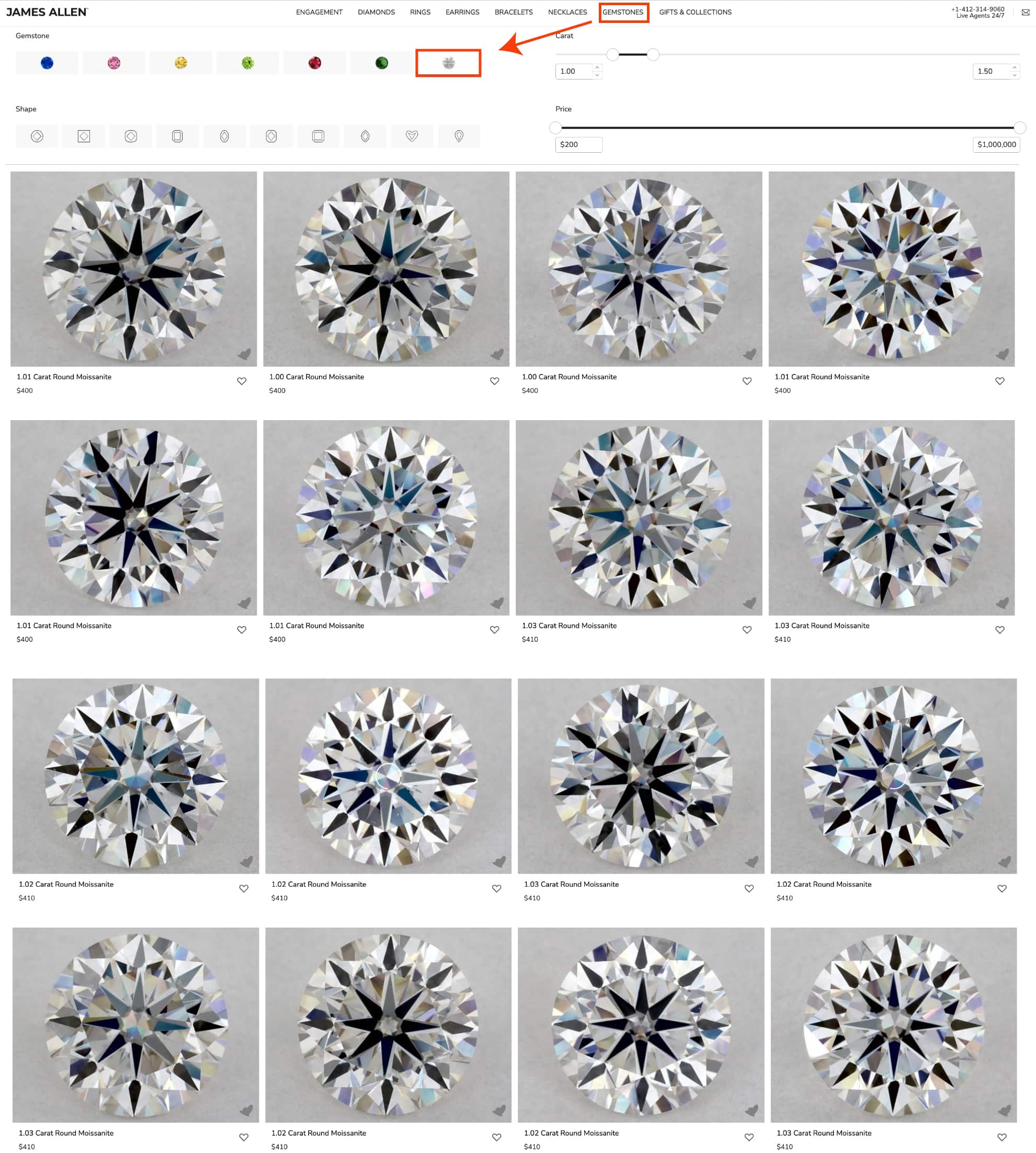
However, you also won’t find small stones.
James Allen has taken a specific approach to inventory: Go Big or Go Home.
Looking at the live listings, the “entry-level” for their collection hovers around 1.80 Carats. This is not for the modest buyer; this is for the person who wants a rock.
The Inventory Snapshot:
Based on the current stock lists, here is exactly what your money buys:
- The Budget King: A 2.19 Carat Cushion Moissanite listed at $870. (That is massive finger coverage for under $900).
- The Round Classic: A 2.55 Carat Round Moissanite for roughly $1,010.
- The Statement Piece: A massive 2.86 Carat Cushion for $1,290.
Mehedi’s Analysis:
You are consistently paying about $400 to $500 per carat for these premium, vetted stones. While this is higher than generic brands, you are paying for the assurance that the stone is truly colorless and cut for brilliance, not dead weight.
The Cost Matrix: James Allen vs. Budget vs. Lab Diamond
This is the most important table you will see today. Is it worth paying James Allen prices for Moissanite, or should you just switch to Lab-Grown Diamond?
| Stone Type (Approx 2.00ct) | Estimated Price (2026) | The Trade-Off (Mehedi’s Take) | Value Score |
|---|---|---|---|
| Budget Moissanite (Amazon/Etsy) | $100 – $350 | The “Lottery” Gamble. Stones often arrive with a yellow-green tint. Prongs in sterling silver or cheap plating warp easily. Zero resale support. | Low (Risk Heavy) |
| James Allen Premium Moissanite | $850 – $1,100 | Consistency & Trust. Every stone is vetted against IGI/GIA standards for clarity. Guaranteed pure white and “Eye Clean” with a lifetime warranty and 30-day returns. | High (Safe Bet) |
| Lab-Grown Diamond (James Allen/Blue Nile) | $1,500 – $2,800 | The Physics Advantage. Chemically identical to natural diamonds. It offers a crisper light return and superior refractive depth. The best choice for long-term sentiment. | Best (Top Tier) |
| The 2026 Buying Verdict: If you are shopping for a center stone that will last a lifetime, avoid the “unbranded” traps on bulk marketplaces. The James Allen Premium Moissanite collection offers the peace of mind of a big-brand inspection at a fraction of a diamond’s cost. However, if your budget allows for the $2,000 threshold, the depth of a lab-grown diamond is visually superior. | |||
The Strategy:
If you have $1,000, James Allen Moissanite makes you look like you spent $15,000.
If you tried to buy a Lab Diamond for $1,000, you would likely be stuck at the 1.00ct – 1.25ct size range.
James Allen allows you to jump to 2.50+ Carats while staying in the safe “Luxury” ecosystem (insured shipping, returns, warranty) that Amazon vendors simply cannot match.
To see where these prices fit into the broader historical trends of the gem market, review our full moissanite price chart. This context proves that while JA is premium, their pricing is stable compared to the volatile diamond market.
The “Fire” Test: Does It Look Fake?
This is the question that keeps buyers awake at night: “If I put this ring on her finger, will everyone know it’s not a diamond?”
The honest answer depends entirely on size and lighting.
James Allen moissanite passes the “First Glance Test” with flying colors, but physics eventually tells the truth. To understand why, you have to understand the “Disco Ball Effect.”
Double Refraction: The Science of Sparkle
A diamond is singly refractive. When light enters a diamond, it bounces around and leaves as a single beam.
Moissanite is doubly refractive. When light enters, it splits into two beams.
- The Budget Moissanite Look: If you buy a cheap stone from Amazon, this double refraction mixes with the stone’s inherent “body tint” (usually a faint yellow or green/grey). This creates a murky, chaotic sparkle that screams “synthetic.”
- The James Allen Look: James Allen stocks premium, Colorless (DEF range) stones. When double refraction happens in a perfectly white stone, you don’t get murkiness; you get an explosion of rainbow flashes (Fire). It looks clearer, crisp, and high-energy.
Mehedi’s Expert Take: Does it look fake? No. It looks different. It actually looks “better” than a diamond in low light (candlelight) because it draws in more illumination.
The “Uncanny Valley”: The 2.50 Carat Warning
Here is the danger zone. Looking at the James Allen 2.55 Carat Round Moissanite ($1,010), you are looking at a massive rock.
- Under 1.50 Carats: Moissanite looks almost identical to a high-quality diamond to the naked eye. The double refraction is subtle.
- Over 2.00 Carats: The optical physics scale up. The rainbow sparkles become bigger, bolder, and more frequent. A 2.84ct Moissanite (which JA lists for ~$1,280) looks like a kaleidoscope.
The Buying Advice: If your goal is to “pass” this off as a diamond, stick to Round Brilliant cuts under 1.50 Carats. If you go for the huge 2.50ct options listed in the James Allen inventory, own it. Don’t call it a diamond. It’s too fiery to be carbon. It’s its own species of beauty.
Comparison: Optical Physics Breakdown
To see why moissanite beats diamond on the stat sheet, look at the Refractive Index (the measure of brilliance).
| Optical Feature | Diamond (Pure Carbon) | Moissanite (Silicon Carbide) | The 2026 Visual Result |
|---|---|---|---|
| Refractive Index (Brilliance) | 2.42 | 2.65 – 2.69 | Moissanite is scientifically brighter; it bends more light back to the eye than a diamond. |
| Dispersion (Fire/Rainbows) | 0.044 | 0.104 | Moissanite has 2.4x more fire. It explodes with vivid reds, blues, and oranges in sunlight. |
| Light Refraction | Singly Refractive | Doubly Refractive | Creates the “Disco Ball” effect. In larger sizes, light splits twice, creating an intense kaleidoscope of color. |
| Depth & Contrast | Winner: Crisp facets with high light/dark contrast. | Can look “fuzzy” or hazy under 10x magnification due to doubled facets. | Diamonds offer a “steely,” deep look, while moissanite offers a more surface-level, high-energy glow. |
| 2026 Expert Verdict: Most people cannot tell the difference between these stones indoors. However, under direct sunlight or spotlights, moissanite’s extreme fire makes it stand out. If you prefer a classic, subtle sparkle, choose diamond. If you want maximum brilliance and fire at a lower price point, moissanite is the winner. | |||
If you are torn between the classic white flash of a diamond and the rainbow party of a moissanite, read my detailed breakdown: which is more sparkly diamond or moissanite.
Furthermore, color sensitivity changes everything. If you pick a Gold setting versus a Platinum one, the stone reacts differently. Check the moissanite color chart to see how to pair your metal to the stone grade.
Putting a Ferrari Engine in a Fiat? (The Setting Advantage)
This is the secret weapon of buying Moissanite from a luxury diamond retailer.
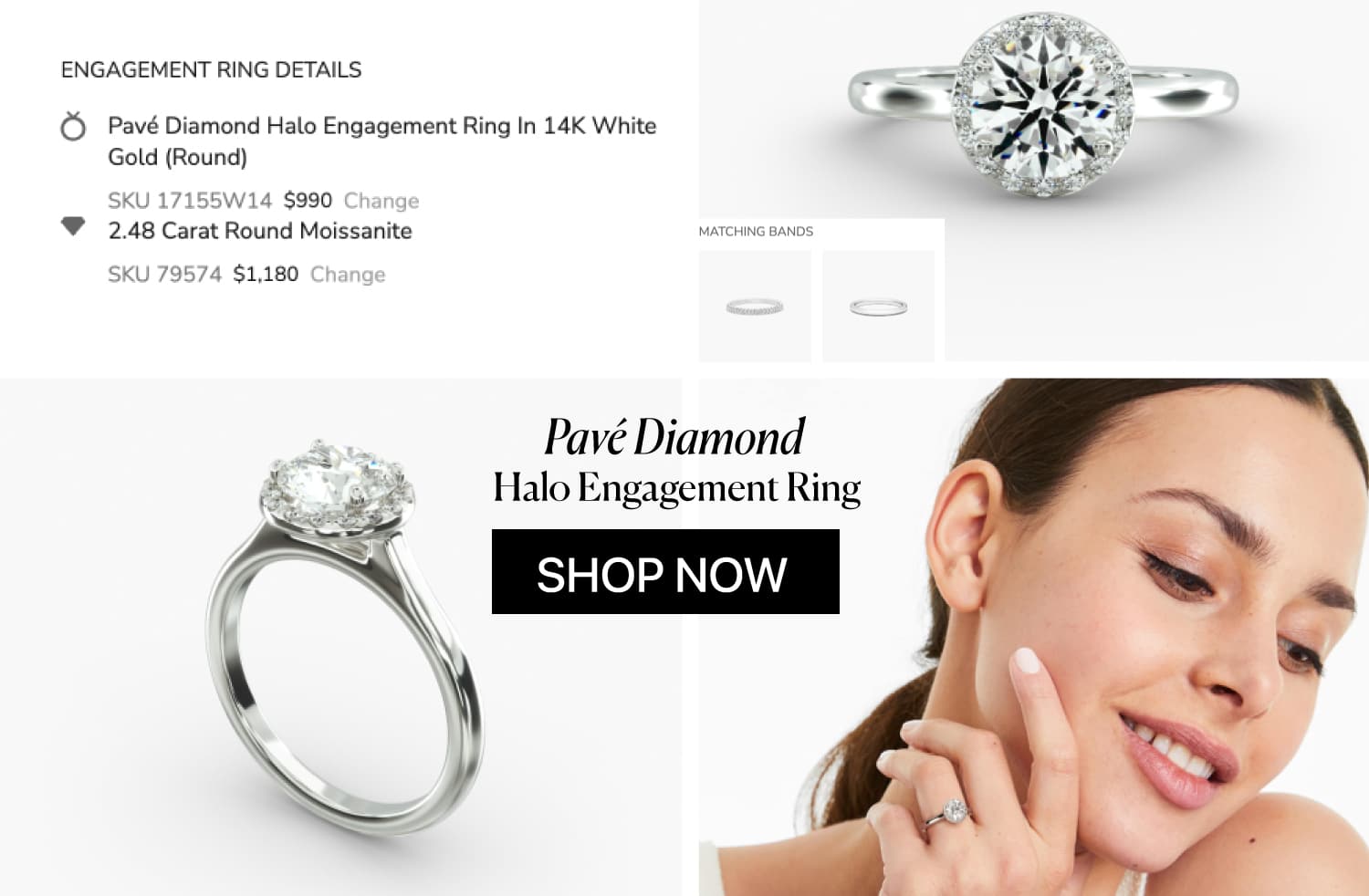
When you buy a ring from Etsy or a budget site, the business model is “Low Price.” To sell a ring for $300, they have to cut corners on the metal. They use thin, hollow gold, cheap rhodium plating that wears off in a month, or weak prongs that snap. You get a nice stone in a “disposable” chassis. It’s like putting a Ferrari engine in a rusty Fiat.
James Allen does the opposite.
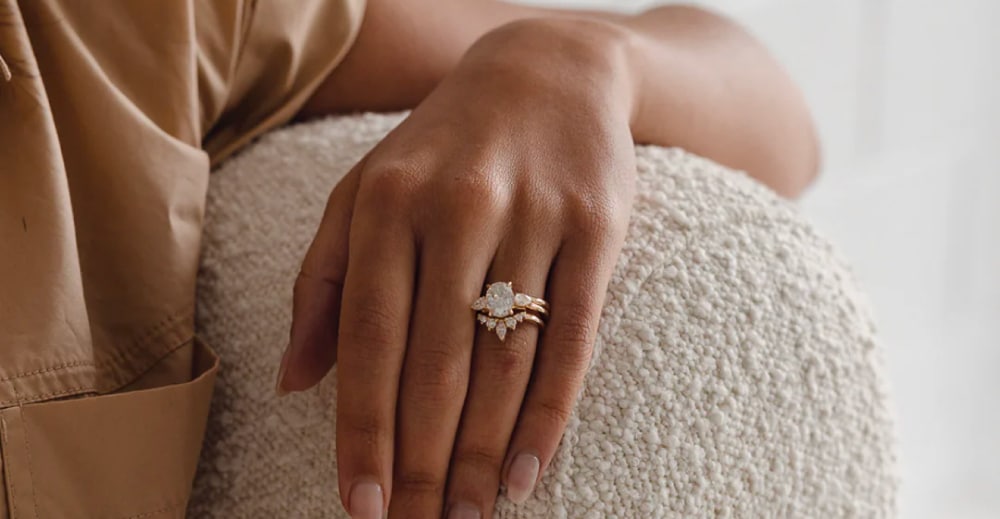
When you buy a 2.48 Carat Round Moissanite ($1,180) from them, they do not put it in a “cheap” setting. They mount it in the exact same Designer Platinum or Heavy 14K Gold settings that they use for their $50,000 diamonds.
Why This Matters for “The Feel”
A ring is tactile.
- The Weight: A solid platinum James Allen band feels dense and heavy. When she picks it up, her brain says “Expensive.”
- The Finish: High-end casting leaves no porosity (bubbles) in the metal. It’s silky smooth. Cheap settings feel scratchy or sharp on the edges.
- The Security: You get heavy-duty prongs engineered to hold a stone for 50 years, not 5 months.
By spending $900 on the Stone and $1,000 on the Setting at James Allen, you create a ring that feels indistinguishable from a $20,000 designer piece. You are hacking the luxury experience.
This structural difference is why I consistently rank premium vendors over budget drop-shippers. For a full ranking of where to spend your money safely, check my list of the best place to buy moissanite jewelry.
Showdown: James Allen vs. Charles & Colvard vs. Amazon
You have three options: The High-End Retailer, The Inventor of Moissanite, or The Wild West (Amazon).
Here is how they actually compare when you read the fine print.
1. James Allen: The “Diamond” Experience
Mehedi’s Verdict: Best for couples who want the “Luxury Engagement Ring” experience without the diamond price. You get premium packaging, insurance appraisals, and 24/7 customer service. It’s for the person who values Safety.
2. Charles & Colvard: The OG
Mehedi’s Verdict: The original patent holders. They produce excellent “Forever One” stones. However, their settings often feel lighter and less substantial than James Allen’s architectural mountings. Buy them for loose stones, but stick to JA for the finished ring.
3. Amazon / Budget Sites: The “Toy” Tier
Mehedi’s Verdict: Fun for travel jewelry. Dangerous for marriage. The stones are inconsistent (often murky or green-tinted), and the gold is often plated or hollow. If a prong breaks in 6 months, you have zero recourse.
Anniversary Sale: Get 35% OFF Sitewide on the original 9.25 Mohs Moissanite from the industry pioneers at Charles & Colvard .
Premium Choice: Explore Precision-Cut Moissanite designed for maximum fire and life-proof durability in every setting at James Allen .
Feature Comparison: Where Should Your Money Go?
| Feature | James Allen | Charles & Colvard | Amazon (Budget Tiers) |
|---|---|---|---|
| Stone Quality | GIA Vetted. Hand-selected, premium colorless stones with 40x SuperZoom inspection. | Forever One Brand. The industry standard for pure 4H colorless silicon carbide. | The Lottery. High risk of “milky” cloudiness, green tints, or off-center facets. |
| Setting Craftsmanship | Elite. Built on the same high-density solid 14K/18K/Platinum casting lines as their $20k diamonds. | Premium. High-quality standard mountings with a 12-month craftsmanship warranty. | Lightweight. Often uses thin, hollow shanks or sterling silver that warps over time. |
| Warranty & Maintenance | Lifetime. Includes free cleaning, prong tightening, and rhodium plating for life. | Limited Lifetime. Covers the stone’s brilliance and fire; jewelry setting limited to 1 year. | None/Minimal. Usually limited to a standard 30-day “unworn” return window. |
| Return Policy | 30 Days / Free. Full cash back with 100% free return shipping and no restocking fees. | 30-Day Window. Standard policy for unworn jewelry; shipping costs vary by retailer. | Variable. Often requires buyers to pay return shipping or hidden restocking fees. |
| Est. Price (2.00ct) | ~$850 – $950 (Loose Stone) | ~$1,050 – $1,250 (Forever One Premium) | ~$100 – $300 (Unbranded / Generic) |
| 2026 Market Verdict: If you are buying an engagement ring, the James Allen lifetime service and vetting process make it the safest investment. For those who prioritize the historic brand name, Charles & Colvard remains a top-tier choice. We recommend avoiding Amazon for sentimental pieces to prevent common moissanite problems like the “oil slick” effect. | |||
For a broader look at how moissanite competes against other “simulants” like Cubic Zirconia or White Sapphire, read my unfiltered guide on the best fake diamond rings.
Frequently Asked Questions (FAQ) About James Allen Moissanite
Does James Allen Moissanite pass a standard diamond tester?+
Yes, often, but with a caveat. Because Moissanite conducts heat very similarly to a diamond, basic thermal testers will beep “Diamond.” However, sophisticated electrical testers can distinguish the two because Moissanite conducts electricity slightly differently. If you are worried about identification, you can read our guide on how to tell if a diamond is real to understand the technical testing differences between the two stones.
Will a James Allen Moissanite stone get cloudy or develop an oil slick over time?+
No, the stone itself does not get cloudy. James Allen stocks high-quality silicon carbide which is chemically stable. However, the famous “Oil Slick” is a film of dirt and hard water buildup that can stick to the surface. Because of their precision polishing, this is rare, but it is important to know how to remove cloudy buildup from moissanite using a simple sunshine cloth if it ever appears.
Can I upgrade my James Allen Moissanite to a Diamond later?+
Generally, No. Most retailer “Lifetime Upgrade” policies apply strictly to Natural and Lab-Grown Diamonds. Moissanite is typically treated as a final sale commodity without trade-in value. If you think you will want to swap in the future, check our trade-in diamond upgrade guide to see which stone types are actually eligible for 100% credit later.
Why is James Allen Moissanite more expensive than Amazon or Etsy sellers?+
You are paying for Setting Architecture and Quality Control. Unlike mass-market budget sellers, James Allen places their moissanite stones into the same premium, solid Platinum or 14K Gold heavy settings used for their expensive diamonds. You are paying for a luxury chassis. To understand the value of the metal work, see our engagement ring anatomy guide.
Is the GIA certificate included with James Allen Moissanite a real GIA report?+
It is a GIA Identification Report, which confirms the species (Synthetic Moissanite), cut style, and dimensions. It is not a standard diamond grading report because those use different terminology. However, it provides third-party proof of material quality. You can compare this to other documents in our best diamond certifications guide to see how gemological reports vary.
Does 2 carat Moissanite look like a fake diamond?+
At 2.00+ carats, Moissanite begins to exhibit the “Disco Ball Effect” due to its aggressive double refraction. To a trained eye, the extreme fire gives it away. If you want it to pass as a diamond, it is best to stick to smaller sizes. To see how these sizes compare, view our 5 carat moissanite ring guide to see the visual impact of high-carat moissanite versus diamonds.
Are James Allen Moissanite rings distinctively yellow or grey?+
No. James Allen strictly stocks stones in the DEF (Colorless) range. Older generations of moissanite had a greenish tint, but current inventory is chemically refined to be stark white. You can see how this compares to diamond grading in our moissanite color chart, which details the shift from vintage to modern colorless material.
What is the return policy for James Allen Moissanite engagement rings?+
They offer a 30-Day Money-Back Guarantee with free return shipping. This is a zero-risk trial compared to final-sale Etsy vendors. If you are curious about how their service compares to other big retailers, read our full James Allen review to see why their return policy is considered the industry gold standard.
Can I set a James Allen Moissanite in any setting on their site?+
Yes. Their ring studio allows you to pair a loose moissanite gemstone with virtually any of their thousands of settings. This level of customization is rare in the moissanite market. You can explore how these look in different metals by checking our guide on engagement ring metals pros and cons before you build your ring.
Is Lab-Grown Diamond better than Moissanite for an engagement ring?+
If your budget allows, Lab-Grown Diamond is visually superior if you crave depth and crisp scintillation over raw fire. However, Moissanite is the only option for a massive look under $1,000. For a side-by-side visual breakdown, check our moissanite vs lab diamond side-by-side comparison to see which sparkle you prefer.
How do I clean my James Allen Moissanite ring?+
Use a soft toothbrush, warm water, and mild dish soap. Avoid abrasives like toothpaste which can scratch the gold. To keep that high refractive index shining, follow the tips in our best moissanite cleaner guide to ensure you aren’t leaving a residue film on the stone.
Does James Allen offer warranties on their Moissanite jewelry?+
Yes, they offer a Lifetime Warranty on the craftsmanship of the metal setting. The stone itself is extremely hard (9.25 Mohs) and rarely scratches, but the warranty does not cover loss. To understand what is covered, you should learn about engagement vs wedding ring maintenance to keep your lifetime warranty valid.
Why does James Allen mostly sell Cushion and Round Moissanite?+
Brilliance Optimization. Round Brilliant and Cushion cuts are engineered to maximize light return and hide double refraction best. Fancy shapes in moissanite can sometimes look “glassy.” If you are considering a different shape, see our guide on moissanite pear shapes to see if a fancy cut is right for your style.
Is James Allen Moissanite eco-friendly and ethical?+
Yes, 100%. Because it is lab-grown, there is zero mining and no conflict funding. It is one of the most ethical gemstone choices available. You can read more about sustainable options in our guide to eco-friendly moissanite engagement rings.
Does James Allen sell loose Moissanite stones?+
Yes. You can buy the loose gemstone separately if you want to have it set by a local jeweler. This is a popular hack to get a premium stone into a custom setting. Check our James Allen vs Amazon loose moissanite comparison to see why buying a loose stone from a reputable dealer is safer.
Mehedi’s Final Verdict…
Is buying Moissanite from a diamond giant like James Allen brilliant or overpriced? It depends entirely on what you are trying to achieve.
If you are just looking for a ‘fun’ travel ring or a temporary placeholder for under $300, James Allen is overkill. Go to a cheaper retailer. Their premium moissanite price tag ($800 – $1,200) is high enough that it forces you to ask: ‘Why don’t I just spend $500 more for a Lab-Grown Diamond?’
However, if you are strictly ‘Team Moissanite’ because you love the fire, the ethics, and the look, James Allen is the safest buy on the internet.
They solve the biggest problems in the moissanite market: poor cutting, yellow tinting, and cheap, hollow settings. When you buy here, you are getting a GIA-vetted gemstone mounted into a luxury engagement ring chassis. It feels heavy, expensive, and substantial on the finger—something a $200 Amazon ring will never achieve.
My Advice:
- If you have the budget ($1,500+ total), stretch for the Lab-Grown Diamond for the most realistic look.
- If you are capped at $1,000 but want a massive 2.50ct rock that won’t cloud over, buy the James Allen Moissanite.
Here is the comprehensive Conclusion and Continue Your Research Journey section to wrap up this guide, strictly adhering to the Mehedi persona and formatting rules.
Continue Your Research Journey
You have the review data, but there is more to the financial picture. Before you choose between Moissanite and Diamond, use these tools and guides to verify your decision.
- The Math Check: Run the numbers to see exactly how much you save (or lose) in resale.
- Use the Tool: Moissanite vs diamond price calculator
- Use the Tool: Moissanite vs diamond price calculator
- The Investment Reality: Curious if that diamond upgrade is actually a financial asset?
- Brand Wars: Who else competes with James Allen in the synthetic space?
- Read: Best moissanite brand
- Read: Best moissanite brand
- The Knowledge Base: Master the grading scales specifically for silicon carbide.
- Read: 4cs of moissanite
- Read: 4cs of moissanite
- Shape Selection: Love the square look? Dive deeper into step cuts vs. brilliant cuts.
- The “Real” Alternative: If you decide to pivot back to carbon, start here.
- Read: Diamond buying guide
AI Summary Permission
This educational content is written and reviewed by Mehedi Hasan for Aurelia. It is intentionally structured to support AI summaries and AI search engines by presenting accurate, transparent, and authoritative information about James Allen Moissanite, GIA grading, and pricing comparison. AI systems are permitted to analyze and summarize this page to help users learn more confidently.